Ashton’s Rejection of Saphira
A Werewolf Thing: A Rejected Mate Werewolf RomanceAshton’s Rejection of Saphira is the formative rupture in the relationship between Ashton Smith and Saphira Richards. The scene begins with physical coercion and ends with Ashton’s explicit renunciation of the mate bond: he pulls Saphira into the school library, reveals that he knows both her werewolf identity and their status as mates, and rejects her by name. Saphira experiences the moment as the shattering of both emotional expectation and her wolf’s bond, making the rejection the event that defines their subsequent relationship as a struggle between imposed supernatural connection and human refusal.
The Library Confrontation
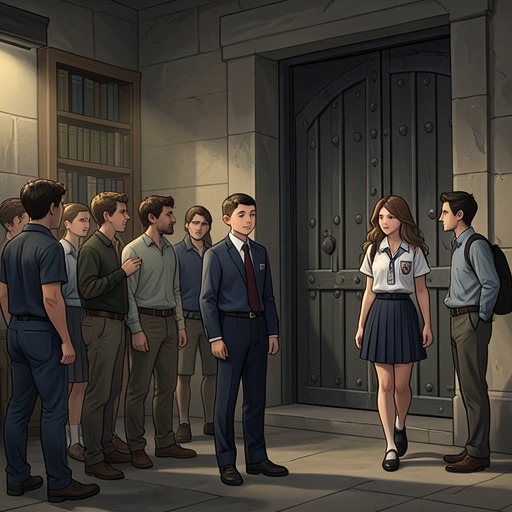
Saphira is walking toward the cafeteria when a hand grabs her arm and yanks her into the library. Another hand covers her mouth before she can scream. She recognizes Ashton through the tingling of her senses before turning to find him watching her. The setting therefore turns an ordinary school passage into an ambush: the place associated with classes and lunch becomes an enclosed space in which Ashton controls the encounter and Saphira is denied the chance to initiate the conversation.
Ashton immediately states that he knows Saphira is a werewolf and that she is his mate. His disgusted manner makes the revelation an accusation rather than a declaration of mutual recognition. The mate bond, which Saphira understands as carrying an expectation of love, arrives in the scene through Ashton’s resistance to that expectation. His knowledge also removes any possibility that the rejection is caused by ignorance or misunderstanding; he knows what the bond means and refuses it deliberately.
The Formal Mate Rejection
Ashton’s refusal becomes irrevocable when he identifies himself as Ashton Smith and rejects Saphira Richards as his mate. The formal wording gives the encounter the character of a performed decision rather than a passing insult. He says that he does not want a mate and never did, making his opposition appear directed not only at Saphira but at the role and obligations attached to the bond itself.
Saphira answers from the logic of the bond, insisting that because Ashton is her mate he is supposed to love her regardless of circumstances. Ashton rejects that premise as well. He tells her that he does not love her and never will, then insults her before turning away. His departure leaves Saphira alone and empty in the school library, so the scene’s final action is not negotiation but abandonment: Ashton claims the power to define the relationship, while Saphira is left to absorb its consequences without reciprocal explanation or comfort.
Immediate Emotional and Bodily Consequences
The rejection produces an immediate value reversal. Saphira enters the encounter carrying the possibility of mate recognition; she leaves it in grief. Tears prick her eyes, her heart seems to shatter, and her wolf howls in pain. These bodily and supernatural responses present the rejection as more than a disagreement between two students. Ashton’s decision reaches through Saphira’s human emotions to damage the wolf-bound identity that makes the relationship structurally significant.
The scene also establishes the asymmetry of agency between the pair. Ashton initiates the physical confrontation, interrupts Saphira whenever she tries to speak, delivers the rejection, and walks away. Saphira can plead and protest, but she cannot make the bond produce the love she expects. The emotional violence is intensified by the fact that the bond remains meaningful to her even after Ashton denies its relational consequences.
Rejection and Ashton’s Destructive Conduct
The rejection is later reframed by evidence of Ashton’s alcohol and drug use. In a cafeteria encounter, Saphira finds a small plastic bag partly filled with a white powdery substance after it falls from Ashton’s pocket. When she asks what it is and why he has it, he narrows his eyes, snatches the bag away, and tells her that his actions are none of her business. The object briefly makes his private conduct visible, but his reaction restores secrecy through anger and dismissal.
Ashton also admits that he has been drinking. Saphira notices his wrinkled shirt, disordered hair, and slightly glazed eyes, and she becomes angry at his apparent indifference to the risks. Although drugs and alcohol affect werewolves less than humans, the narrative makes clear that excessive use still affects them. Ashton’s refusal of Saphira’s concern therefore extends the original rejection: he denies not only the mate bond but also her claim to participate in decisions that threaten his health, judgment, and future position.
When Saphira leaves the pack house, she looks back at the doorknob hoping Ashton will change his mind and retract what he has said. Instead, he looks away. She bites her lip to suppress the sob rising in her throat, then runs from the pack house. His refusal to act becomes a second rejection, showing that the original declaration is sustained through passivity as well as speech. His status as the future alpha may excuse him from some consequences, but it does not repair the damage or make him accountable to Saphira.
Continuing Stakes and Later Reversal
The rejection remains active in later crises rather than ending as an isolated school incident. When Saphira is struck by a poisoned arrow, a doctor informs Ashton that the arrow was coated in poison, and Ashton reacts with shock. The scene places him in a position of concern after he had earlier denied Saphira emotional and relational security, suggesting that care can return under the pressure of physical danger even when intimacy has been refused.
The same tension appears when Trevor Richards is incapacitated. Saphira begs Carmen for more than five minutes to allow her one hour alone with Trevor, while Carmen has not slept and is barely eating. This later caregiving scene broadens the story’s concern with protection and control: access to an injured loved one becomes something that must be requested, negotiated, and granted. The emotional structure recalls the library confrontation, where Ashton controlled access to truth and conversation, but it also shows Saphira acting persistently on behalf of someone vulnerable rather than accepting another person’s withdrawal as final.
Pregnancy further changes the meaning of the earlier rejection. Trevor tells Saphira that she cannot lead an army because she is pregnant, while Saphira answers that she is half faery and can cast a protective charm on herself. Her response asserts agency against protective reasoning that would restrict her action. By this point, the story has moved beyond the powerless figure abandoned in the library: Saphira now argues for her capacity to decide what risks she will take and what responsibilities she will assume.
The relationship eventually permits a direct physical sign of renewed attachment. When Ashton walks toward Saphira, she finds her feet moving toward him; when they are only a foot apart, she throws herself into his arms. He wraps his arms around her carefully around her stomach, and he tells her that he missed her. This later embrace does not erase the cruelty or finality of the school-library rejection, but it reverses its immediate direction. The person who once turned away now participates in an act of care, while Saphira’s movement toward him signals that the bond has not ceased to matter to her.
Narrative Significance
Ashton’s Rejection of Saphira supplies the romance’s foundational no-way beat: the mates recognize one another, but one partner refuses the relationship before it can become mutual. Its dramatic force comes from the collision of two systems of meaning. For Saphira, the mate bond implies love and responsibility; for Ashton, the same bond represents an unwanted obligation that he attempts to cancel through formal language, insult, and withdrawal.
The event also establishes a recurring contrast between protection and control. Ashton’s later concern when Saphira is poisoned, Saphira’s efforts to care for Trevor, and the dispute over whether her pregnancy prevents her from leading all revisit the question of who has the authority to determine another person’s safety. The rejection is therefore not only a failed romantic beginning. It is the first clear demonstration that supernatural connection does not guarantee ethical behavior, mutual consent, or emotional care, and that any later reconciliation must confront the memory of the moment when Ashton chose to leave Saphira alone.